
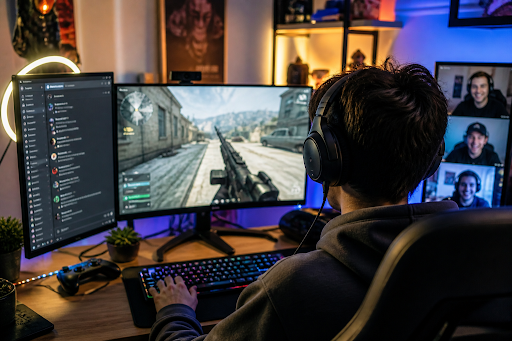
A few years ago, online games were often seen as nothing more than entertainment. People played to relax, compete, or simply escape daily routines for a while. But over time, gaming has evolved into something much bigger. Today, online games have become digital spaces where people build friendships, strengthen communication, and create communities that often feel more genuine than many interactions on traditional social platforms.
What makes this transformation interesting is that it happened naturally. Players did not join games looking for friendship. Most joined because they wanted entertainment, competition, or challenge. Yet somewhere between teamwork, voice chat, shared victories, and difficult losses, many discovered something unexpected—real connection. In an age where many digital conversations feel temporary or surface-level, gaming has quietly created spaces where relationships often grow through shared experiences instead of curated online identities.
Gaming Creates Natural Social Interaction
One of the biggest reasons online games feel different from other digital platforms is the way communication begins. On most social media platforms, people often feel pressure to present a polished version of themselves. In gaming, that pressure usually disappears. Conversations begin with shared objectives, quick decisions, and real-time teamwork.
Players communicate because they need to solve problems together. They support each other because success often depends on collaboration. Over time, those repeated interactions begin creating trust. This is why communities across different gaming spaces, including entertainment ecosystems such as slot gacor, often feel more active and connected than many traditional online spaces. Players are usually remembered not for how they present themselves, but for how they perform, communicate, and support others when challenges appear.
Shared Challenges Build Stronger Connections
Friendships usually become stronger when people experience challenges together, and gaming naturally creates those moments. A difficult match, an unexpected comeback, or a strategy that only works because everyone stayed focused can create memories that players remember long after the session ends.
Many players who begin as strangers eventually become regular teammates. Some play together for months, others for years. What starts as a simple game session often grows into daily conversations, inside jokes, shared routines, and friendships that continue beyond the game itself.
This is one reason gaming communities continue growing so quickly around the world. The emotional investment created by shared wins, losses, and difficult moments often builds trust much faster than ordinary online conversations ever could.
Online Games Quietly Improve Communication Skills
Another reason gaming has become socially valuable is the communication it demands. Many modern games require players to share information quickly, react under pressure, and make decisions together in real time. These situations naturally develop skills that are useful outside gaming as well.
Players often become better listeners. They learn how to communicate clearly under stress, how to adapt when plans suddenly change, and how to stay calm when situations become unpredictable. Over time, these experiences create confidence that carries into everyday life. For younger players especially, these environments can become an unexpected place to develop leadership, teamwork, and emotional awareness.
Global Communities Are Changing Player Perspectives
Modern gaming is no longer limited by geography. Players from different countries, cultures, and languages now share the same digital environments every day. In international ecosystems such as slot server thailand, players often interact with people they may never have met in offline life.
These interactions create something unique. Players do not only improve teamwork or strategy—they also become more open to different communication styles, new perspectives, and cultural differences. For many people, gaming has quietly become one of the most accessible forms of global social interaction.
People Stay for the Community, Not Just the Game
One of the biggest reasons online games continue growing is simple—people may join because of the gameplay, but many stay because of the community. The excitement of competition matters, but the relationships built along the way often become the real reason players return.
Technology will continue evolving, graphics will become more advanced, and gaming platforms will keep improving. But beyond all of that, the strongest part of gaming has never been technology alone. It has always been the people, the conversations, the friendships, and the communities that make players feel like they truly belong.
